Article
A month-by-month breakdown of Algarve weather — temperatures, rainfall, sea conditions, and the best times to visit for hiking, surfing, golf, and beach holidays.
The Algarve has one of the best climates in Europe. Around 300 days of sunshine per year, sea temperatures that stay swimmable from May through October, and winters mild enough that outdoor activities never really stop. But conditions vary more than the brochures suggest, and the "best month to visit" genuinely depends on what you're planning to do.
This guide breaks it down month by month.
The Basics: Algarve Climate at a Glance
The Algarve sits at the southernmost tip of mainland Europe, sheltered from Atlantic winds by the Serra de Monchique mountain range to the north and west. This gives it a warm, dry Mediterranean climate with one important characteristic: more sunshine hours than almost anywhere on the continent.
Average annual sunshine: 3,000+ hours (more than the Canaries or Madeira)
Rainfall: Almost all of it falls between November and March
Sea temperature: Ranges from around 16°C in February to 24°C in August
Prevailing winds: From the southwest. The east Algarve (Tavira, Faro) is generally calmer; the west (Sagres, Aljezur) is reliably windier and better for surfing.
Month by Month
January & February — Mild Winters, Almond Blossoms
Average temperatures: 10–16°C
Sea temperature: 16–17°C (cold for swimming)
Rainfall: Moderate to high
Crowds: Very low
January and February are the quietest months of the year, with some of the cheapest accommodation prices you'll find in the Algarve. The crowds are absent, the landscape is green after autumn rains, and the famous almond blossom (late January into February) turns the interior of the Algarve into something resembling a Japanese cherry blossom season.
Good for: walking, road cycling, birdwatching in Ria Formosa, and day trips into the Serra de Monchique.
Not ideal for: swimming or surf (the Atlantic is cold and conditions can be unpredictable).
March — The Start of Something Good
Average temperatures: 12–18°C
Sea temperature: 17°C
Rainfall: Moderate, dropping off through the month
Crowds: Low
March is the beginning of the Algarve's best season. Wildflowers are still at their peak, days are noticeably longer, and accommodation is still off-season priced. The hiking trails open up fully and the light is extraordinary — photographers love it.
The Seven Hanging Valleys Trail (Percurso dos Sete Vales Suspensos) runs between Marinha and Benagil, combining dramatic cliff formations with views out to the Atlantic. March is one of the best months to walk it — comfortable temperatures, green cliffs, minimal crowds.
April — Peak Wildflower Season, Spring Warmth
Average temperatures: 14–21°C
Sea temperature: 18°C
Rainfall: Low
Crowds: Building (Easter can bring peaks)
April is arguably the Algarve's single best month. Temperatures are perfect for outdoor activity — warm enough for the beach, cool enough for long hikes. The wildflowers are still blazing, the sea is getting warmer, and Easter brings a welcome wave of visitors without the summer crowds.
April weather Algarve: expect sunny days with an average of 8 hours of direct sunshine. Evenings cool to around 13–15°C, so a light layer is useful after sunset.
The Fóia Trail (Monchique) climbs to the highest point in the Algarve at 902m. April is the ideal month — the summit views stretch to the Atlantic and the Serra is covered in heather and wildflowers.
May — Warm, Uncrowded, Near-Perfect
Average temperatures: 17–25°C
Sea temperature: 19–20°C
Rainfall: Very low
Crowds: Moderate and manageable
May is the month most frequently recommended by people who know the Algarve well. The sea is warm enough to swim, the beaches aren't yet packed, and the heat is pleasant rather than punishing. Accommodation prices are still significantly below summer peaks.
May weather Algarve: long days (sunsets at 8:30pm), minimal cloud, reliable warmth. The sea at 19–20°C is comfortable for extended swims.
The Ecovia do Litoral — the Algarve's coastal cycling route — runs 214km from Vila Real de Santo António in the east to Cabo de São Vicente in the west. May is the ideal month to tackle a multi-day section: manageable heat, quiet roads, and wildflowers still in bloom.
June — Summer Begins, Heat Builds
Average temperatures: 20–28°C
Sea temperature: 21–22°C
Rainfall: Negligible
Crowds: High, rising through the month
June is the first month of busy season. The weather is excellent — reliable sunshine, warm evenings, the sea is comfortable for swimming. School holidays haven't started yet (until late June in the UK and Ireland), which means the beaches are full but not overwhelmed.
Best for: boat trips, water sports, beach days.

July & August — Peak Summer: Hot, Crowded, Brilliant
Average temperatures: 24–33°C (August can push higher)
Sea temperature: 23–24°C
Rainfall: Essentially zero
Crowds: Maximum
The Algarve at its most intense. Inland temperatures regularly exceed 35°C in heat waves; the coast stays cooler thanks to the sea breeze. The beaches are packed, accommodation prices are at their annual peak, and you need to book everything — restaurants, boat trips, activities — well in advance.
The upside: the weather is as reliable as it gets. If your priority is guaranteed sun and warm sea, this is your window.
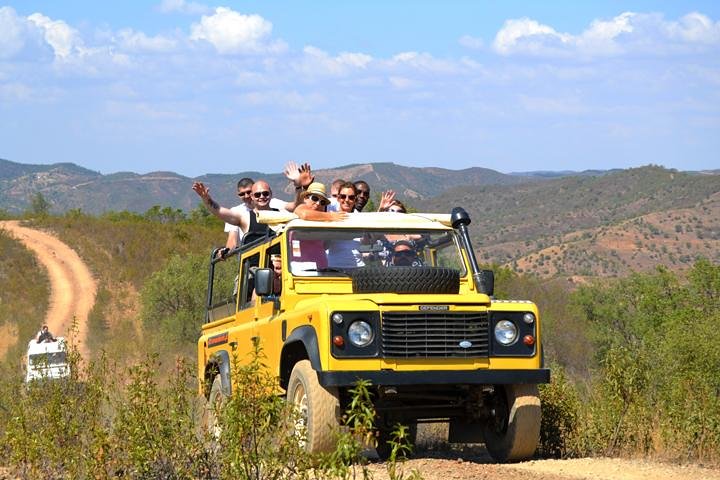
For escaping the beach crowds, a jeep safari into the interior Algarve is one of the best options in summer. You'll be in shade for much of the day and see a side of the region most tourists miss entirely.
September — The Best Month Nobody Books
Average temperatures: 21–29°C
Sea temperature: 23°C
Rainfall: Very low
Crowds: Dropping sharply after the first week
September is objectively the best month in the Algarve and consistently the least appreciated. Sea temperature is at its annual peak (23°C), the summer crowds have gone, and prices drop sharply from mid-September. Schools are back across the UK and Ireland, so the beaches feel yours again by the second week.
The west coast and Sagres come into their own in September. Atlantic swells increase through the month, making it the start of proper surf season for intermediates and the best conditions for beginners to learn without crowded lineups.
October — The Algarve's Best-Kept Secret
Average temperatures: 18–24°C
Sea temperature: 21°C
Rainfall: Low to moderate (increasing through the month)
Crowds: Low
October is consistently underrated by UK and Irish visitors. Temperatures sit in the ideal 20°C sweet spot — warm enough to swim comfortably, cool enough for serious hiking. The sea is still warm. The light in autumn has a quality that summer can't match.
Algarve weather October: average 7 hours of daily sunshine, warm enough for short-sleeve days, cooler evenings (14–16°C). The first rains usually arrive in the last week of October, but rarely disrupt more than a day or two.
The Rocha da Pena Circuit is one of the Algarve's finest inland hikes — a limestone plateau with panoramic views, wild orchids, and diverse birdlife. October is arguably its finest month.
November — Quiet, Green, Genuinely Underappreciated
Average temperatures: 13–19°C
Sea temperature: 19°C
Rainfall: Moderate to high
Crowds: Very low
November brings the rains and with them, the landscape turns green almost overnight. The wildflowers are a month away but the air is clean, accommodation is cheap, and the Algarve feels like it belongs to the people who actually live there. Good for long walks, exploring villages, and eating in restaurants without needing a reservation.
December — Mild Winters and Christmas Markets
Average temperatures: 10–16°C
Sea temperature: 17°C
Rainfall: Moderate to high
Crowds: Low (rising briefly around Christmas)
December in the Algarve is considerably milder than northern Europe. The interior towns — Loulé, Silves, Tavira — host Christmas markets and the festive atmosphere is genuine rather than manufactured. It's the off-season, which means prices are low and the locals are visible again.
Best Time to Visit: By Traveller Type
Hikers and trail runners: March, April, October, November — cooler temperatures and green landscapes.
Surfers (beginners): September and October on the west coast for manageable swell; April and May on calmer east-facing beaches.
Surfers (intermediate/advanced): October through March on the west coast (Sagres, Aljezur, Carrapateira, Odeceixe). October and November particularly for consistent swell with fewer crowds.
Golfers: March, April, October, November. Courses are in peak condition, temperatures are ideal, and green fees are lower than summer.
Families: June (before UK schools break) and September (after UK schools return). Full facilities, warm sea, manageable heat.
Budget travellers: November through February — cheapest accommodation, emptiest beaches, mild enough to enjoy.
Wildlife and birdwatching: February (almond blossom and winter bird populations), October and November (migratory birds through Ria Formosa).
The Ludo Trail runs through the Ria Formosa wetlands near Faro airport — one of the best birdwatching spots on the whole Iberian Peninsula, and genuinely rewarding at any time of year.
What About the West vs. East Algarve?
The Algarve isn't uniform in its weather. The further west you go, the windier and wilder it gets.
East Algarve (Tavira, Faro, Olhão): Calmer, slightly warmer, more sheltered. The lagoon system keeps summer temperatures from reaching the extremes of the interior. Best for family beach holidays, birdwatching, and sea kayaking.
Central Algarve (Albufeira, Portimão, Silves): The tourist heartland. Reliable sun, accessible beaches, full facilities. What most people imagine when they think "Algarve weather."
West Algarve (Lagos, Sagres, Aljezur): Cooler, windier, and more dramatic. Better for surfers, hikers, and anyone who prefers a wilder landscape. The trade-off is that summers here are noticeably less hot than the east — which is often exactly what serious outdoor travellers are looking for.
The Fisherman's Trail (Rota Vicentina) along the west coast is one of the finest coastal walks in Europe — best walked in spring or autumn when the Algarve's famously wild coast is at its most dramatic.
Experience It Yourself
Book a guided experience in the Algarve
Twister Private Water Tubing in the Algarve
From €15
Water Ski Experience Algarve
From €50
Banana Private Water Tubing in the Algarve
From €20
Get the Algarve Insider
Hidden trails, local events, and experiences worth booking.
No spam. Unsubscribe anytime.
Related Guides
Discover more of the Algarve
Algarve Package Holidays 2026: What UK Travellers Actually Pay
Comparing real Algarve package holidays for 2026: flight and hotel combinations from £79 to £349 per person, breaking down what suits each type of UK traveller.