About This Route
The official PR3 MCQ circular on the Algarve's highest mountain: 6.8 km starting at the Fóia summit car park, descending to the EN 266 and climbing back. Rated somewhat difficult, with rare Monchique rhododendron in spring.
Fóia Trail (PR3 MCQ)
The official trail on the Algarve's highest mountain is PR3 MCQ – Trilho da Fóia, a 6.8 km circular starting and finishing at the Fóia summit car park. It is waymarked by Câmara Municipal de Monchique and rated somewhat difficult.
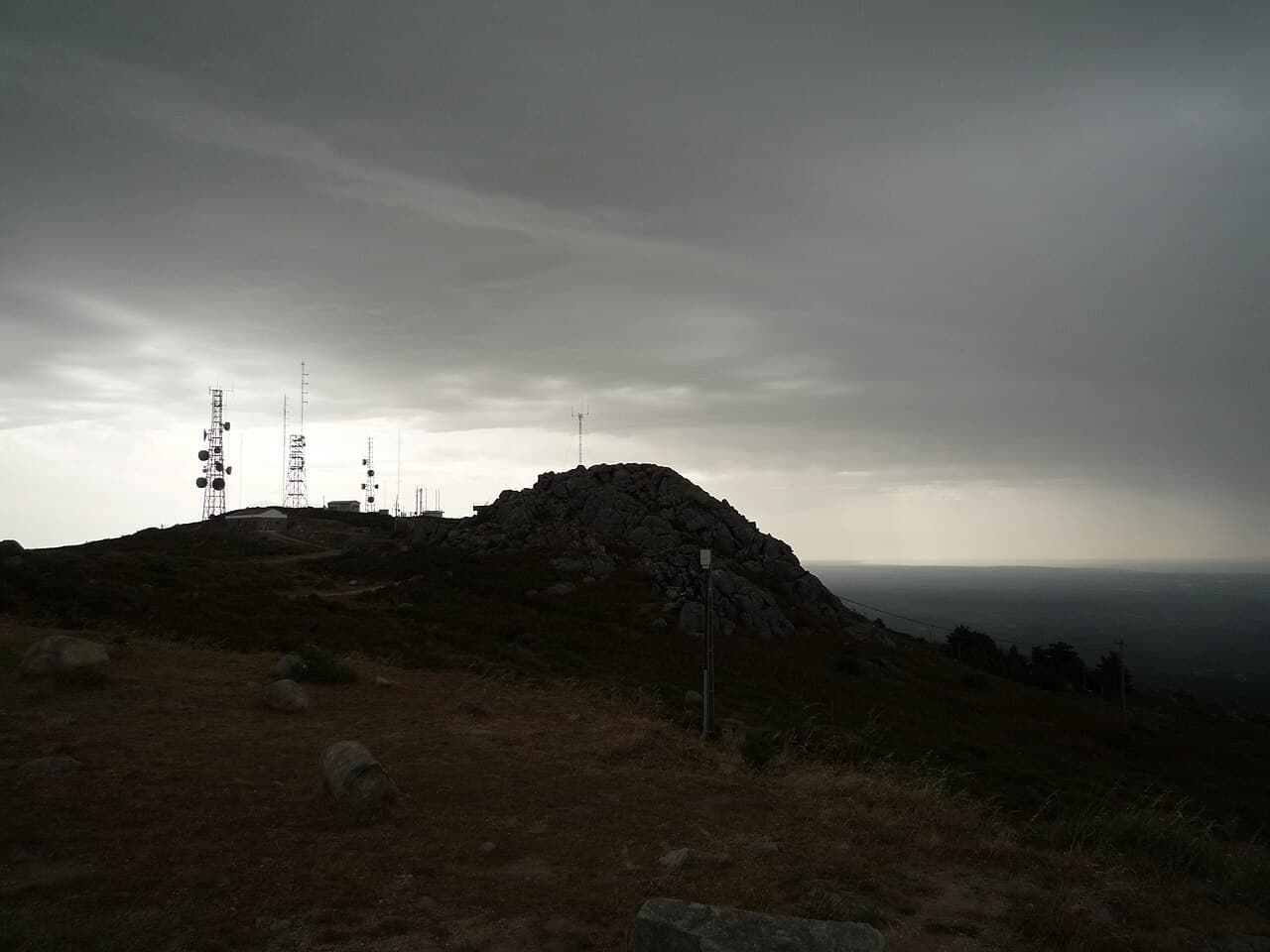
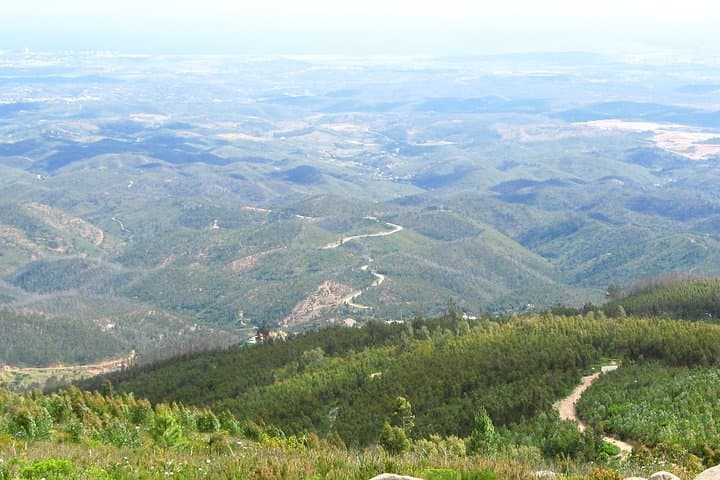
Note what this route is and is not. It does not climb Fóia — it starts at the top and descends. You drive to 892 m, walk down to 617 m at the EN 266-3, and climb back. If you want the summit, it is a two-minute walk from the car park, and the actual high point of the Algarve at 902 m is occupied by radar domes and telecommunications masts. The view is the reason to come; the summit itself is an industrial installation.
Verified trail data
| Official code | PR3 MCQ |
| Municipality | Monchique |
| Start / finish | Fóia summit car park (N37°18'53.11" W8°35'44.21") |
| Type | Circular |
| Distance | 6.8 km |
| Official duration | 2 h |
| Official difficulty | Somewhat difficult |
| Maximum altitude | 892 m (at the start) |
| Minimum altitude | 617 m (at the EN 266-3) |
| Water | Available |
| Shops | Yes |
| Surface | Asphalt road, cobbled road, then dirt track |
On the elevation figures: the municipality publishes cumulative climb of 1,078 m and cumulative descent of 315 m. Those cannot both be right on a circular route, where ascent and descent must balance. GPS-recorded profiles consistently return around 310–315 m, which matches the published descent and the 275 m difference between the trail's high and low points. We have used 315 m here and flagged the discrepancy rather than repeat a figure that doesn't reconcile.
The route, in order
The walk begins at the Fóia car park beside the Centro Museológico. Take the two minutes to stand on the actual summit first — on a clear day you see from Cabo de São Vicente in the west to the Spanish border in the east, with the Alentejo behind you.
From the car park the route follows the asphalt road, then continues straight ahead at the crossroads and begins descending toward the EN 266. This descent is the botanical highlight: lavender (Lavandula luisieri), heather (Erica spp.), gum rockrose (Cistus ladanifer), and the adelfeira (Rhododendron ponticum subsp. baeticum) — a relict Iberian rhododendron found in Portugal almost nowhere but this mountain, spectacular in flower between April and June.
The descent ends on a cobbled road, then a short section on the EN 266 itself. This is a real road with constant traffic and no pavement. Walk facing the traffic, single file, and keep children and dogs under close control. It is the one genuinely hazardous part of the route.
The trail then turns left off the asphalt onto dirt track, and the character changes entirely — old agricultural terraces where grazing still goes on, cork oak and strawberry-tree woodland, cool damp air. Near the top the route joins the GR13 Via Algarviana and follows it back almost to the summit.
Why the Serra de Monchique is different
This is not limestone or schist. The Serra is a syenite intrusion — nepheline syenite, an igneous rock that weathers into deep, fertile, acidic soil. Combined with roughly double the rainfall of the rest of the Algarve, that produces a genuinely distinct botanical island, part of the Natura 2000 network, with species found nowhere else in the region.
You will notice it as a change in air quality and temperature within minutes of leaving the coast road.

If you want more
PR5 MCQ – Percurso Pedestre das Cascatas also starts from Fóia: a 16.6 km circular taking in the Barbelote and Penedo waterfalls and a stretch shared with the Via Algarviana. Note that Almargem have flagged a temporary gate closure on a property near Fóia affecting both PR5 and Sector 11 of the GR13 — check before setting out.
Getting there
From the EN 125 take the EN 266 to Monchique, then the EN 266-3 signposted to Fóia. It is a steep, winding eight kilometres from the town to the summit. Free parking at the top, plus a café and craft stalls. There is no public bus to the summit; the Vamus bus serves Monchique village only.
Caldas de Monchique, the thermal spa village, is fifteen minutes down the same road and worth combining with the walk.
Route data verified against the official PR3 MCQ record published by Câmara Municipal de Monchique, August 2026.
Prefer a Guided Tour?
Go with a local guide who knows the best spots along this route
Twister Private Water Tubing in the Algarve
From €15
Water Ski Experience Algarve
From €50
Banana Private Water Tubing in the Algarve
From €20
Elevation Profile
Trail Details
Safety Notes
A short section of this route runs along the EN 266, a live road with constant traffic and no pavement — walk facing the traffic, in single file, and keep children and dogs under close control. The summit is exposed and can be cold and very windy even in summer; carry a windproof layer. Fog can close in quickly and reduce visibility to a few metres. Dirt sections get slippery after rain. Emergency: 112.
Best Time to Visit
Best April to June, when the adelfeira (Rhododendron ponticum subsp. baeticum) is in flower — it grows almost nowhere else in Portugal. Autumn is clear and comfortable. Winter brings the best long-distance visibility but also the most fog; if the summit is in cloud you will see nothing at all, so check the forecast. Summer is cooler here than on the coast but the asphalt sections still bake.
What's Nearby
Discover more within 10km

Algarve
Portugal's sun-drenched southern coast — over 100 beaches, dramatic limestone cliffs, world-class surf, and 300+ days of sunshine a year. The ultimate destination for outdoor adventure in Europe.
Private Kayak Tour to the Benagil Caves with 4K Photos
If you want to enjoy a private and more intimate experience this is your best choice. This tour is made for those who would like to go along with a guide and have a more personalized adventure in...
Visit Secret Caves, Hidden Beaches and Snorkel in Alvor, Portugal
Perfect for first time and experienced snorkelers Children friendly (floating platforms provided) This half day tour is known to be one of the most relaxing and fulfilling experiences offered in...

Sunrise Small Group Kayak Tour to the Benagil Cave & 4K Photos
Avoid the masses: Carvalho's beach is just 5 min away from Benagil beach, but is just enough so we avoid the crowds

Algarve Tandem Skydive 15k ft (4600m)
Our activity stands out as the premier skydiving experience in Portugal, offering a thrilling tandem jump from 15,000ft with stunning views of the Algarve coastline. No previous experience is...
Algarve wine tour and mountain top trip with lunch or dinner at sunset time
Join an intimate wine tour of two local vineyards/farms and their cellars, guided by a wine expert and learn about all the process of winemaking, from the vineyard to the bootle. Enjoy tasting three...
More Routes to Explore
Discover more of the Algarve

São Lourenço Trail
An easy loop through the wetlands of Quinta do Lago, perfect for birdwatching with chances to spot flamingos and the rare Purple Swamphen.