About This Route
Portugal's GR13 — 308.5 km and 14 waymarked sectors across the Algarve interior, from the Guadiana at Alcoutim to the lighthouse at Cabo de São Vicente. 84 hours of walking, 11,275 m of ascent, and almost none of it within sight of the sea.
Via Algarviana (GR13)
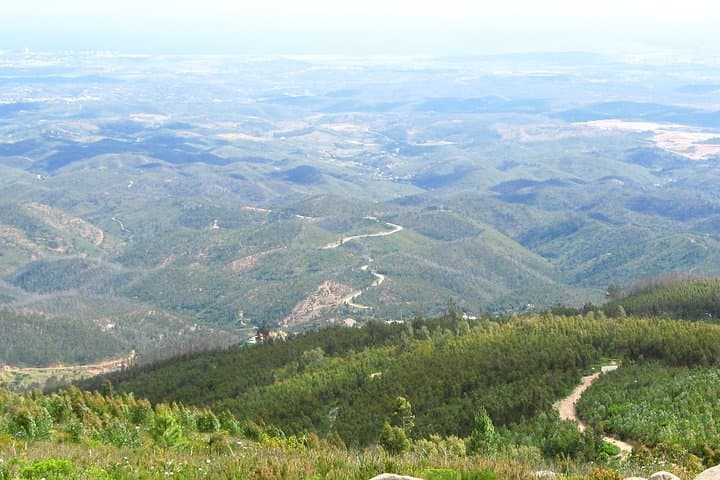
The Via Algarviana is not a coastal walk. That is the first thing to understand about it, and the thing that surprises most people who arrive expecting the Algarve of the postcards. The GR13 runs through the interior — the schist hills of the Serra do Caldeirão, the limestone barrocal, the cork oak and eucalyptus of the Serra de Monchique — and only meets the Atlantic in its final hours, at the lighthouse on Cabo de São Vicente. For thirteen and a half of its fourteen sectors, you will not see the sea.
It is waymarked end to end with the red-and-white GR flashes certified by the Federação de Campismo e Montanhismo de Portugal, and managed by the Almargem association, who publish free GPX and KML tracks and a sector-by-sector guide. The full traverse is 308.5 km with 11,275 m of cumulative ascent and 11,301 m of descent, and the official time estimates add up to 84 hours of walking — realistically 14 to 18 days once you account for rest days and split sectors.
The 14 sectors
Distances, grades, ascent, descent and walking times below are the official figures published by Almargem for each sector. The difficulty grade is the official Roman-numeral scale: I very easy, II easy, III reasonably hard, IV hard, V very hard.
| # | Sector | Distance | Ascent | Descent | Time | Grade | Water |
|---|---|---|---|---|---|---|---|
| 1 | Alcoutim → Balurcos | 24.2 km | 840 m | 653 m | 7 h | IV – Hard | Yes |
| 2 | Balurcos → Furnazinhas | 14.3 km | 431 m | 457 m | 4 h | II – Easy | Start only |
| 3 | Furnazinhas → Vaqueiros | 22.6 km | 635 m | 592 m | 6 h | III – Reasonably hard | End only |
| 4 | Vaqueiros → Cachopo | 14.9 km | 676 m | 513 m | 4 h | III – Reasonably hard | Yes |
| 5 | Cachopo → Barranco do Velho | 29.5 km | 1,733 m | 1,619 m | 8 h | V – Very hard | Yes |
| 6 | Barranco do Velho → Salir | 14.0 km | 459 m | 707 m | 5 h | III – Reasonably hard | Start & end |
| 7 | Salir → Alte | 16.4 km | 437 m | 499 m | 5 h | III – Reasonably hard | Yes |
| 8 | Alte → S. B. de Messines | 20.6 km | 556 m | 641 m | 5 h | III – Reasonably hard | Yes |
| 9 | S. B. de Messines → Silves | 29.0 km | 1,369 m | 1,469 m | 8 h | V – Very hard | Start & end |
| 10 | Silves → Monchique | 32.1 km | 1,718 m | 1,302 m | 8 h | V – Very hard | None |
| 11 | Monchique → Marmelete | 14.8 km | 814 m | 882 m | 4 h | III – Reasonably hard | Yes |
| 12 | Marmelete → Bensafrim | 30.0 km | 676 m | 1,030 m | 7 h | IV – Hard | Yes |
| 13 | Bensafrim → Vila do Bispo | 29.7 km | 697 m | 641 m | 8 h | V – Very hard | Yes |
| 14 | Vila do Bispo → Cabo de São Vicente | 16.4 km | 234 m | 296 m | 5 h | II – Easy | Start & end |
| Total | 308.5 km | 11,275 m | 11,301 m | 84 h |

The sectors that will catch you out
The official grades are honest, and worth reading before you plan your days.
Sector 10, Silves to Monchique, is the hardest day on the trail: 32.1 km with 1,718 m of ascent, climbing from the Arade valley at 15 m to the shoulder of Picota at 774 m, and the official water listing is a flat No. There is nothing between the two towns. Most people either split it with an intermediate stop or arrange a transfer. Almargem have also flagged a blocked public path around km 21–22 on this sector, with an alternative track published on the sector page — check before you go.
Sector 5, Cachopo to Barranco do Velho, is the biggest single ascent figure on the route at 1,733 m over 29.5 km, all of it in the folded schist of the Serra do Caldeirão. There is no dramatic summit; the height is accumulated in dozens of climbs in and out of ravines, which is precisely what makes it hard.
Sector 9 and Sector 13 are both graded V. Nine is the long grind out of the barrocal into Silves; thirteen is deceptive — only 697 m of ascent, but 29.7 km across the Espinhaço de Cão with very little shelter.
Sectors 2 and 14 are the two easy days. Fourteen, out to Cabo de São Vicente, is a gentle finish across the coastal plateau, and the point where the GR13 meets the Rota Vicentina — many walkers turn north here onto the Fishermen's Trail rather than stopping.
Highest and lowest points
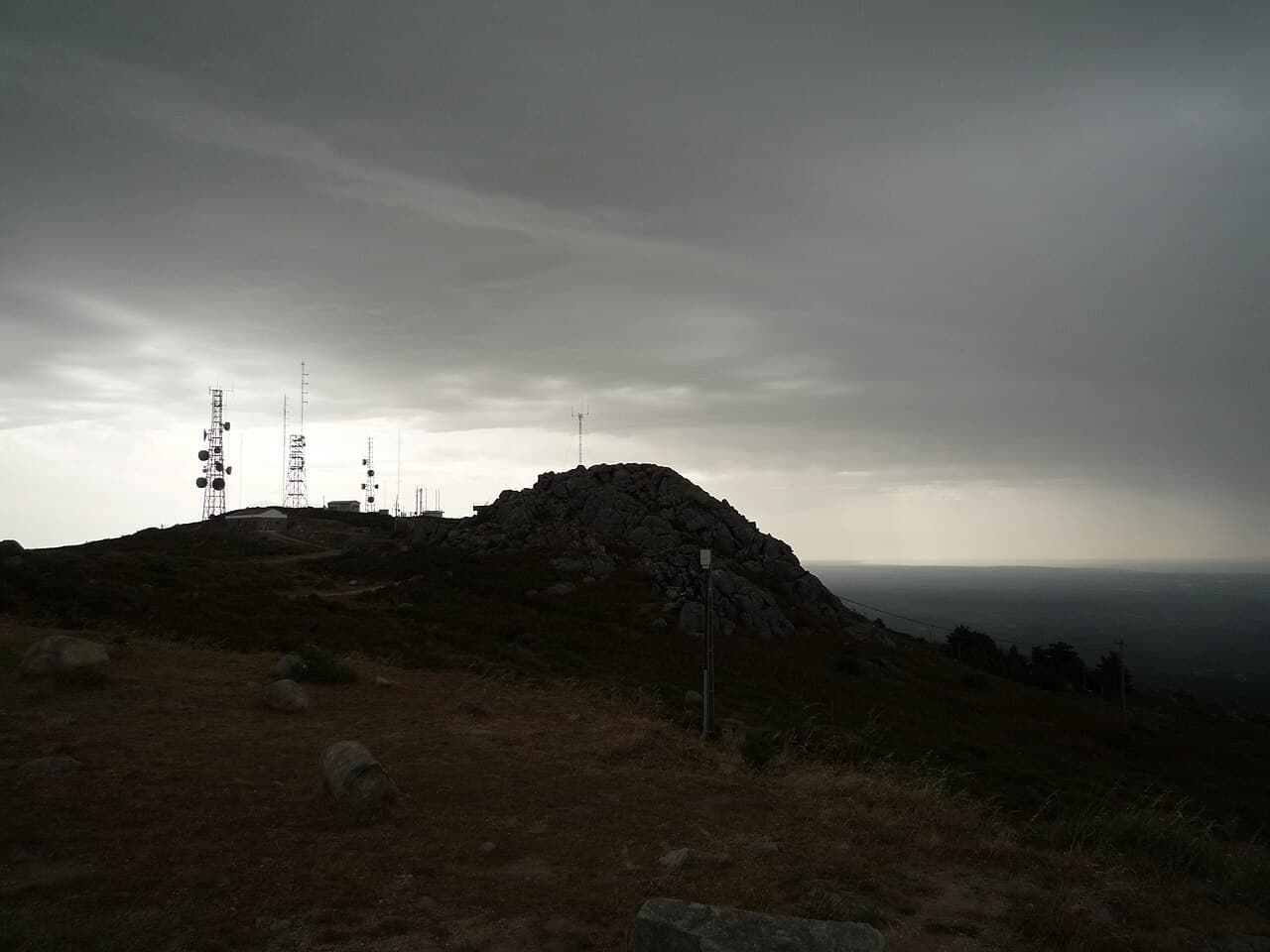
The trail's high point is 844 m on Sector 11 between Monchique and Marmelete, on the flank of Fóia — at 902 m the highest point in the Algarve, and a short detour from the route. The low point is 6 m at Alcoutim Pier on the Guadiana, where the walk begins.

Direction, and where to start
The route is described and waymarked west-bound, from Alcoutim to Cabo de São Vicente. Walking it in this direction means the hardest mountain sectors fall in the middle and the finish is easy and coastal, which is the better shape for a long walk. It also means the prevailing westerly wind is in your face — a real consideration in winter, and a welcome one in April.
The official start is Alcoutim Pier (N37°28'17.65" W7°28'16.53"), reached by bus line 34 from Vila Real de Santo António. There is an ATM in Alcoutim; there is not another one for some distance.
Water, shade and heat
This is the part that catches people out. The interior Algarve is materially hotter than the coast, routinely exceeding 40 °C in July and August, and several sectors have no water and effectively no shade. The official sector pages list water availability explicitly — read them, and treat "start and end only" as meaning exactly that. Carry three litres minimum in warm months, more on Sector 10.
Village shops are small and keep irregular hours. Do not plan on resupplying at midday, or on a Sunday.
When to go
February to May and September to November. Spring is the better of the two: the hills are green, the wildflowers are out, and the streams still hold water. Autumn is warmer and drier but the light is good and the crowds are gone. Avoid June to August entirely.
Tracks and guides
Almargem publish free GPX and KML tracks and a downloadable PDF guide for every sector, plus a free GR13 app for Android and iOS. Individual sector GPX files follow a consistent pattern, for example Sector_1_VAlgarviana.gpx. Download the current tracks before you travel — the route is occasionally re-routed around blocked paths and land-use changes, and the published files are updated.
Route data verified against the official Via Algarviana sector pages published by Associação Almargem, August 2026.
Prefer a Guided Tour?
Go with a local guide who knows the best spots along this route
Twister Private Water Tubing in the Algarve
From €15
Water Ski Experience Algarve
From €50
Banana Private Water Tubing in the Algarve
From €20
Elevation Profile
Trail Details
Safety Notes
Remote trail with long gaps between services. Sectors 5, 9, 10 and 13 are graded V (Very Hard) and each takes around 8 hours. Water is NOT available mid-route on several sectors — Sector 10 (Silves to Monchique) has no water at all, and Sectors 2, 3, 6, 9 and 14 have water only at the start and/or end. Carry 3 litres minimum in warm weather. Mobile coverage is patchy across the Serra do Caldeirão. Download the official GPX tracks before setting out; waymarking is good but not a substitute for navigation. Book accommodation in advance — turning up unannounced in villages like Furnazinhas or Marmelete is not viable. Emergency: 112. Wildfire reporting: 117.
Best Time to Visit
Best walked February–May and September–November. Avoid June to September: the interior regularly exceeds 40°C, there is very little shade, and water sources are unreliable. Spring brings wildflowers and flowing streams; autumn is drier but milder and less crowded. Winter is walkable and often beautiful, but days are short (sunset around 18:00 in December) and heavy rain can make stream crossings awkward. The recommended direction is east to west, Alcoutim to Cabo de São Vicente — walking it in reverse inverts the ascent and descent figures and changes the difficulty of several sectors.
What's Nearby
Discover more within 10km

Algarve
Portugal's sun-drenched southern coast — over 100 beaches, dramatic limestone cliffs, world-class surf, and 300+ days of sunshine a year. The ultimate destination for outdoor adventure in Europe.
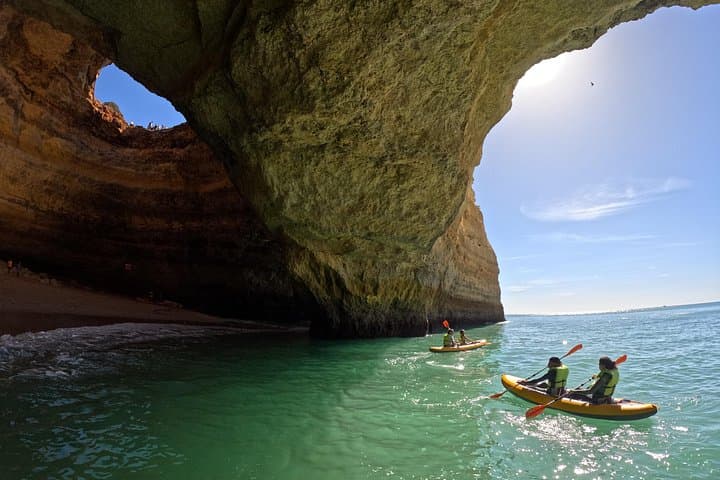
Private Kayak Tour to the Benagil Caves with 4K Photos
If you want to enjoy a private and more intimate experience this is your best choice. This tour is made for those who would like to go along with a guide and have a more personalized adventure in...
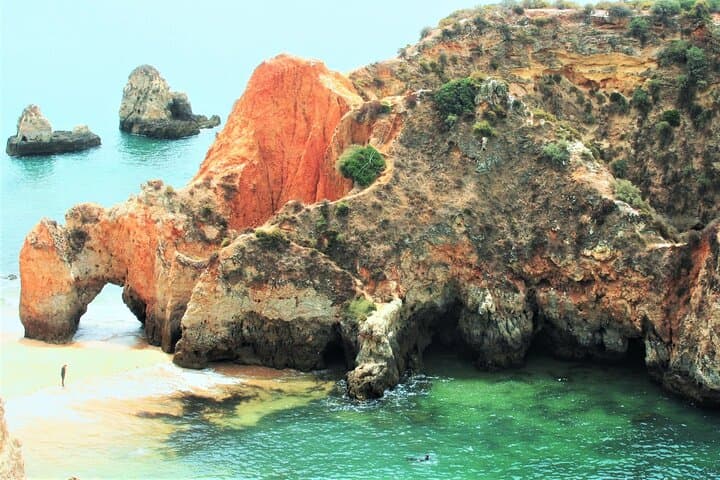
Visit Secret Caves, Hidden Beaches and Snorkel in Alvor, Portugal
Perfect for first time and experienced snorkelers Children friendly (floating platforms provided) This half day tour is known to be one of the most relaxing and fulfilling experiences offered in...

Sunrise Small Group Kayak Tour to the Benagil Cave & 4K Photos
Avoid the masses: Carvalho's beach is just 5 min away from Benagil beach, but is just enough so we avoid the crowds

Algarve Tandem Skydive 15k ft (4600m)
Our activity stands out as the premier skydiving experience in Portugal, offering a thrilling tandem jump from 15,000ft with stunning views of the Algarve coastline. No previous experience is...
Algarve wine tour and mountain top trip with lunch or dinner at sunset time
Join an intimate wine tour of two local vineyards/farms and their cellars, guided by a wine expert and learn about all the process of winemaking, from the vineyard to the bootle. Enjoy tasting three...
More Routes to Explore
Discover more of the Algarve
Fóia Trail
The official PR3 MCQ circular on the Algarve's highest mountain: 6.8 km starting at the Fóia summit car park, descending to the EN 266 and climbing back. Rated somewhat difficult, with rare Monchique rhododendron in spring.